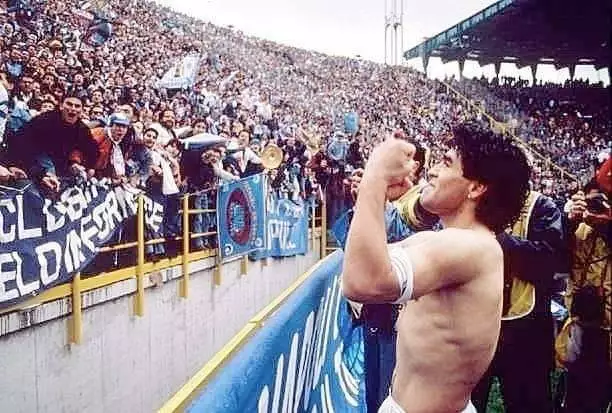
On a small soccer field, I forge an immortal left foot and also the great commitment to the cause of the working class. His name is Diego Armando Maradona, who was not only the greatest footballer of all time, but a powerful inspiration for the working class in Latin America.
Maradona was the expression of the poorest sectors oppressed by the system. He knew how to cross that barrier of exclusion in which the capitalist system leaves you anchored. Not only that, but also, Maradona was the voice of those who could not overcome that barrier. He always stood strong with those, who not only seek to overcome that barrier, but also fight against it. Thus, was born with his commitment to popular causes, one of the most important of which is the Cuban revolution, and always remained a strong supporter of Cuban socialist model.
In the words of the Argentine journalist Pablo Llonto "Maradona found his political side in Fidel and Che Guevara". The relationship between Fidel Castro and Maradona started way back in the 1980’s, to be specific, from July 29, 1987, which was the day when Maradona and Fidel met for the first time, in Havana, Cuba. This Meeting took place a year after Maradona led the Argentine Soccer Team to win the World Cup. Argentine journalist, Pablo Llonto, was one of the managers of this meeting, which at first seemed impossible upon Maradona's refusal.

It was difficult to arrange that first meeting. At that time Maradona was not sure about traveling to Cuba as he was afraid of being used politically. Although during that time, Maradona already had his first sympathies with the ideas of Che Guevara.
That first trip and that first meeting with Fidel Castro, was a before and after for Maradona in his life. That first meeting of 1987 was the beginning of a strong friendship with not only Fidel, but also with the entire Cuba, with its people and with the revolution. Pablo Llonto recalled that when Diario Clarín, where he worked, prohibited him from entering the company, Maradona was one of the few who showed solidarity, by refusing to deliver notes to the Clarín business group, between 1992 and 1994; a fact that few know, but that marked his class consciousness.
The 90’s were the first reflections of Maradona and his commitment against injustices and the fight against them, over the years Maradona began to feel injustices and inequalities very strongly and started to raise his voice against them. Maradona was seen protesting against FIFA when he was a footballer, protesting Vatican gold and many things.
Life found him in completely different circumstances during 2000 from that of 1987. Maradona needed to overcome his drug addictions and Fidel advised him to come to Cuba and opened the door of his country for Diego, while in Argentina, they closed the doors of all the clinics to Maradona. Diego arrived in Cuba for a six-month rehabilitation, however he ended up living 5 years in Cuba.

For Maradona, Fidel was like a father, who opened the doors of his country for his treatment and recovery. Fidel used to call him every day, even at dawn to find out how Diego's health was, and they used to chat on the phone for hours, during those days of Diego’s stay in Cuba. The relationship between Maradona and Fidel was one of mutual admiration and in 2005, Maradona finally returned to Argentina.
In 2005 Maradona was seen in Mar del Plata in that historic "No to the FTAA (Free Trade Area of the Americas)".
The "No to the FTAA" was a broad political-social movement carried out by governments, political parties, unions and social organizations throughout the American continent. It featured highly relevant personalities including Diego Armando Maradona himself, who was present with Commander Chávez, Lula, Evo Morales to oppose the free trade regime that the United States tried to impose on Latin American countries.

Undoubtedly, Maradona's life is a work full of glorious moments and ups and downs, today the world remembers the footballer Maradona but he has been more than that, he was also an important political figure for Argentina, and for the cause of the peoples of the world. This facet of Maradona is also the one that many media want to minimize only to highlight footballer Maradona. But Diego’s persona is much bigger than that and no matter whether the person is alive or not, the ideas always remain.
The relationship between Fidel and Maradona was key for Diego to carry out the struggle of the oppressed class of the world and they were two great friends, the coincidences of life made this story of mutual admiration end on the same day of 25th November, 4 years apart.