10

Jan

7:13pm
Owen Williamson USA
Kazakhstan in Crisis:  How to Marxists make sense of it?

Kazakhstan in Crisis: How to Marxists make sense of it?

Owen Williamson USA //7:13pm, Jan 10th '22

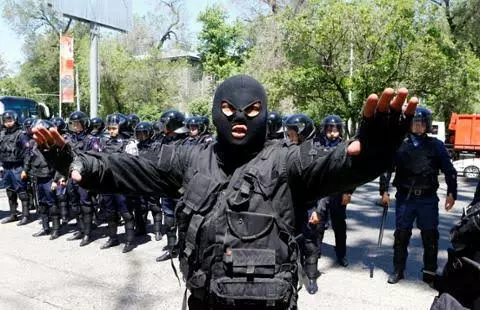
In recent days, unexpected civil unrest in the former Soviet republic of Kazakhstan has confused many international observers, particularly those who are seeking some sort of a class-based explanation for what is happening in that country. Media coverage of the spontaneous revolt that has shaken that country features up to now very little identifiable division of forces between “progressives” or “the left” on the one hand, vs. conservative or right-wing elements on the other, no clear revolutionary agendas or platforms, and little or nothing in the way of coherent programmes or demands on any side. According to a January, 2022 report from Russia’s Zanovo Media, as translated and published by the American online journal Jacobin, “Underground” Resistance organizations such as the Socialist Movement of Kazakhstan (Социалистического движения Казахстана) have so far had no on-the-ground leadership role in the protests.

Factors involved

According to reports, the current level of unrest in Kazakhstan involves internal factors including:

  • Most immediately, fuel price increases;
  • Ongoing lack of internal democracy, a political system described as “autocratic” and rigid; No effective avenue for peaceful protest;
  • Inflation, unemployment and impoverishment;
  • Economic disruption caused by COVID.
  • Image

    External factors fanning the protests include:
  • Geopolitical pressures, including intense pressures from Western Europe to continue an uninterrupted supply of oil to pipelines, and from Russia, to suppress any possible “color revolution” in Kazakhstan like that in Ukraine;
  • If you read our blogs then why not our magazine!!!
    Image
    Click here to subscribe our monthly magazine
  • Western interest in maintaining geopolitical pressure on Russia, particularly in the immediate context of the current Russia/Ukraine armed standoff;
  • Various types of foreign Islamist pressure, either from nearby Afghanistan, Pakistan and Iran, or from further afield (e.g., Wahabi influence from Saudi Arabia; radical Islamist ideology from foreign groups like Daesh [“ISIS”] and Al Qaeda).
  • As has been widely reported in mainstream capitalist media, the spark for the current unrest was a doubling of prices for LPG (Liquified Petroleum Gas, the most commonly used automobile fuel in Kazakhstan). Kazakhstan is oil-rich, but in the post-Soviet era the country’s oil wealth has been sold off to private companies, mostly Western. Thus, the country’s government no longer controls the sale price of petroleum and gas products.

    Image

    For almost 29 years, from the breakup of the USSR in 1990, until March of 2019, Kazakhstan was ruled by Nursultan Nazarbayev (Нурсултан Абишевич Назарбаев), former Prime Minister of the former Kazakh SSR. His ruling style might be described as Soviet-like, but utterly without the Soviets’ socialist ideals (Communist discipline, equality, workers’ power) or high ethics (in fact, credible allegations have been made that Nazarbayev and family have vastly enriched themselves by selling off the nation’s wealth). The current president, Kassym-Jomart Tokayev ( Касым-Жомарт Кемелевич Токаев), took office in 2019 upon Nazarbayev’s resignation.

    Sources for more information:

    For the best currently available English-medium Marxist background analysis of the daily-changing situation in Kazakhstan, one should look at the online “Statement of the Socialist Movement of Kazakhstan on the situation in the country” on the http://socialism.kz website expresses the viewpoint of the country’s Marxist opposition. The original online article is in Russian, and an English-speaker may have to use an online translation-program. A January 9, 2022 English-language article in the Jerusalem Post, “Israel and Kazakhstan: When bland Foreign Ministry statement says it all,” explains a great deal of the larger global geopolitical context behind Kazakhstan’s current crisis, albeit from a Zionist point of view that some readers may well find unacceptable. One may also consult Jacobin magazine’s January, 2022 article, “Kazakhstan’s Protests are About Soaring Inequality for further analysis.
    American Electoral Dialectics: A Comment on the 2022 US ‘‘Mid-Term Elections’’
    Owen Williamson USA//2:23am, Nov 10th '22

    American Electoral Dialectics: A Comment on the 2022 US ‘‘Mid-Term Elections’’

    The November 8, 2022 American elections have come and gone, with most reported results showing divided control over Congress, State and local elected offices. If anything is remarkable about the elections....

    Read More
    The West's Fear of Vietnam's Anti-graft and Corruption Campaign
    Luis Lazaro Tijerina USA//9:44pm, Dec 1st '22

    The West's Fear of Vietnam's Anti-graft and Corruption Campaign

    With few exceptions, the Western world fears any country that probes too deeply into the business and military corporations that build its economic empires on political and monetary corruption. It should....

    Read More
    WITHIN THE WALLS: A memoir of the plague in Quebec City
    Luis Lazaro Tijerina USA//7:03pm, Feb 18th '22

    WITHIN THE WALLS: A memoir of the plague in Quebec City

    Chapter V PART II: My Caput Galeatum, and the Divine Québec SceneryJournal Entry: Sept. 13, 2020, Anse au FoulonThis afternoon, it being Sunday, I took a walk on the Plains of Abraham, as I usually do....

    Read More
    Beyond AFSPA: When Killings Cease to Shock a Nation
    George Chakma India//9:14am, Dec 10th '21

    Beyond AFSPA: When Killings Cease to Shock a Nation

    On 4th December, 2021, the 21 para, a special forces unit of the Indian army laid an ambush near Oting village of Mon district of eastern Nagaland. The area is close to the Arunachal Nagaland border and....

    Read More
    Mutumbaism: How the process of neoliberal globalization has turned Kenya into a second hand nation
    Mwandawiro Mghanga Chairperson Communist Party of Kenya//12:19am, Aug 11th '21

    Mutumbaism: How the process of neoliberal globalization has turned Kenya into a second hand nation

    Mutumba is a Kiswahili word that was originally used to refer to second hand clothes. This is because the first second hand commodities that were sold at a large scale were clothes. Now that today second....

    Read More
    Analyzing the Complex Landscape: Taiwan Post-Elections
    Saheli Chowdhury India//8:22pm, Feb 2nd '24

    Analyzing the Complex Landscape: Taiwan Post-Elections

    US-Taiwan Relations:How do you perceive the current state of relations between the United States and Taiwan, in the context of the elections that just happened?All the major parties of Taiwan that participated....

    Read More