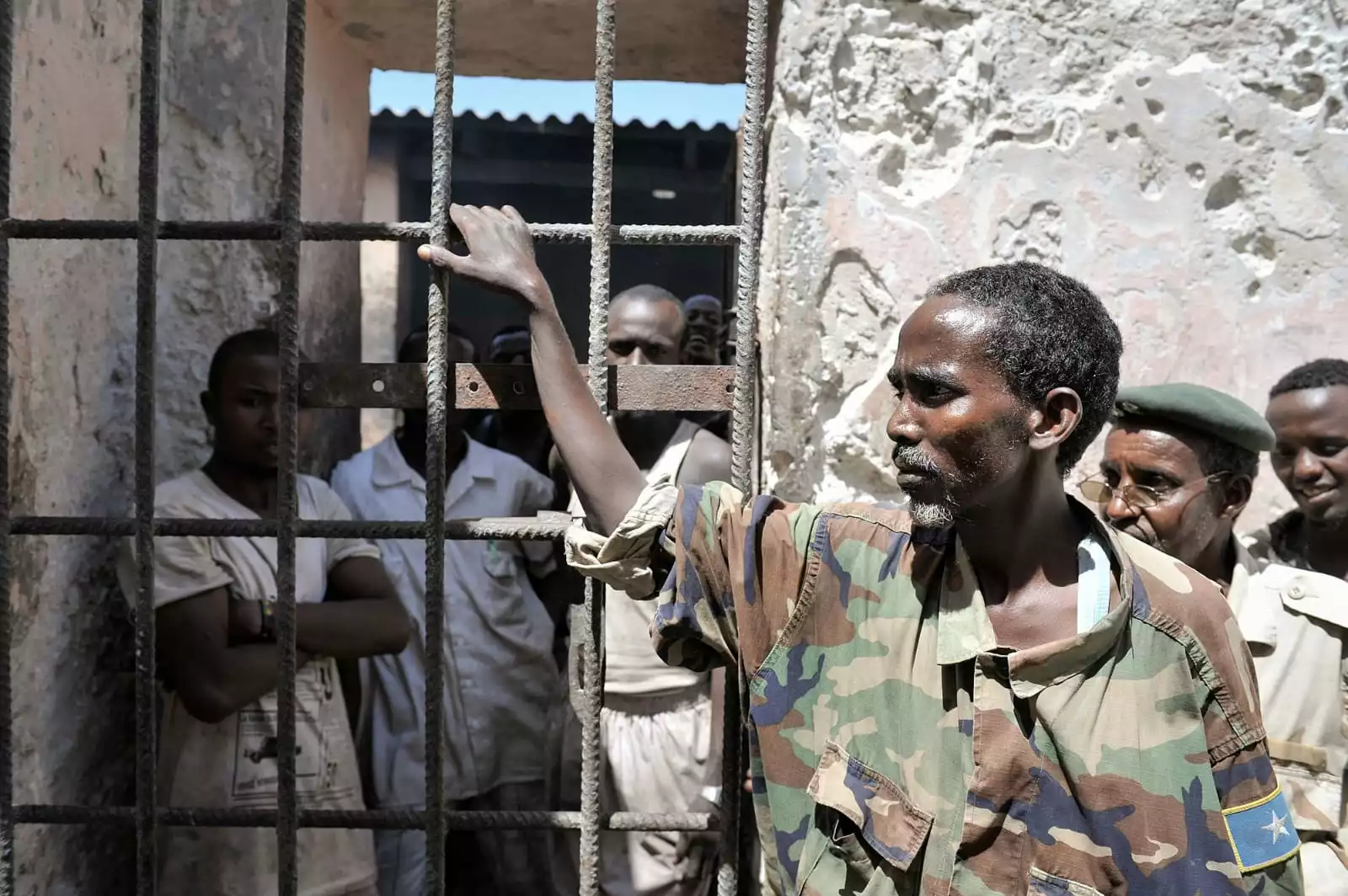
The Russia-Ukraine war has widened the rift between the entrenched West and the emerging East and – as collateral damage ⸺ Africa’s already sordid human rights record will regress further. According to Statista, a leading provider of market and consumer data, eight African states rank among the world’s 15 countries with the worst human rights and rule of law records as of 2022. Of course, such ratings are sometimes controversial, subjective and drafted with certain agendas in mind, but even that is on its own a strong indicator of how ordinary Africans are set to continue bearing the brunt of the geopolitical fights between especially China/Russia on one hand and the West on the other. Many African countries have gone decades into a new life, after they attained their independence from Western nations, with the help of either or both China and the then Union of Soviet Socialist Republic (Russia). Many have also sought to break free from the political influence and economic reliance of the former colonial master, turning their focus to China, India and Russia.
It is quite telling then, that China and Russia both feature in the top 15 Statista list, with none of the Western superpowers appearing, despite racism and hostile foreign policies being part of their governance and domination strategy.
Panellists at a seminar dubbed “The State of Human Rights in Africa”, held at the Egrek Cinema in Parkhurst, Johannesburg on 23rd March 2023, almost unanimously agreed that, while African governments came short in fulfilling their human rights obligations to their citizens, a Western hand cannot be ruled out completely from those who keep on spoiling the broth.
While converging in the argument that the concept of human rights extends beyond victims of civil strife and the mere process of holding elections which propel politicians to power, to the provision of basic services to citizens, the panellists added that the West did also set the wrong foundation for post independence Africa.
Without trying to absolve the actions of African governments, human rights lawyer Magdalene Moonsamy argued that the violation of human rights in Africa was a colonial construct.
“...human rights is just a muzzle tool of colonial character to counteract its ability to be taken to task for its wrongness. And I think when we understand and go into the history of what happened in African history collectively, we will appreciate that, you know we look at the situation in South Sudan ⸺ there is peace today, there is war tomorrow; the husband and wife get kicked out of the cabinet. There is absolutely no government, there is no accountability,” said Moonsamy.
Of the many disparities of colonial rule in Africa, the same colonial master who still seeks to police international affairs and run the rule on human rights and good governance has left no space for restitution. Resultantly, it has been difficult for many an African government to correct what former Zimbabwean President, Robert Mugabe termed “the imbalances of the past”.
Zimbabwe, for all of ZANU(PF)’s failings, is one good example of a corrective situation gone wrong with the aid of the West. In 2000, Mugabe embarked on a land reform exercise which he claimed was meant to redistribute land to a landless black majority dispossessed by the colonial regime. Riding on the human rights abuses which followed the land reform programmes, the USA struck Zimbabwe with sanctions in the form of the Zimbabwe Democracy and Economic Recovery Act (ZiDERA), which cuts balance of payment support to the Southern African country and directs governors of US banks sitting on any board of a Bretton-Woods institution to block lending and debt relief to Zimbabwe.
Mugabe’s own hand in the resultant political and economic melee cannot be ruled out though as, in a bid to address the human rights deficiency in terms of equal access to land, he allowed war veterans, ZANU(PF) supporters and youth militias to go on an orgy of violence, resulting in the brutal murder of at least five white commercial farmers, displacement of many others and the laying off of thousands of black farm workers. He had politicised and racialised the land redistribution exercise, giving a sorry view of how a government’s fight with the West can affect ordinary citizens.
Having politicised what was otherwise a genuine land restitution exercise, Mugabe suddenly fell from the erstwhile African poster boy of the West to be one of the most hated African leaders. Zimbabwe has now effectively been politically divided into two ⸺ a failing ruling party claiming to be friends with China on one hand and a hostile mainstream opposition with Western backing on the other. Meanwhile, ordinary Zimbabweans continue to suffer, with their country now one of the highest migrant producing countries as its economy has literally crumbled during the last two decades. The East versus West fight, however, does not begin and end with Zimbabwe. The USA recently ordered South Africa to stop doing military drills with Russia and start engaging the USA instead, as the fallout from the Russia-Ukraine war continues to affect African states.
A few weeks later, as South Africa prepares to host the August 2023 BRICS Summit, the International Criminal Court (ICC) levelled war crimes charges against Russian President Vladimir Putin. The crimes, which include allegations of the kidnapping of Ukrainian children during the ongoing war, are meant to further checkmate Pretoria’s relations with Russia ahead of the BRICS Summit.
One thing for certain though is that the East versus West fight, coupled with what has been seen as the “New Scramble for Africa”, will have a huge bearing on the human rights situation of African citizens. Economic measures, Western-sponsored opposition parties, media houses and non-profit organisations on the one hand and vindictive governments on the other, are likely to trample on the rights of ordinary citizens while fighting against each other.
This article war first published in The African Mirror
Editor's Note:
The views and informations expressed in the article are solely those of the author and may or may not reflect the views of The International. We believe in providing a platform for a range of viewpoints from the left.